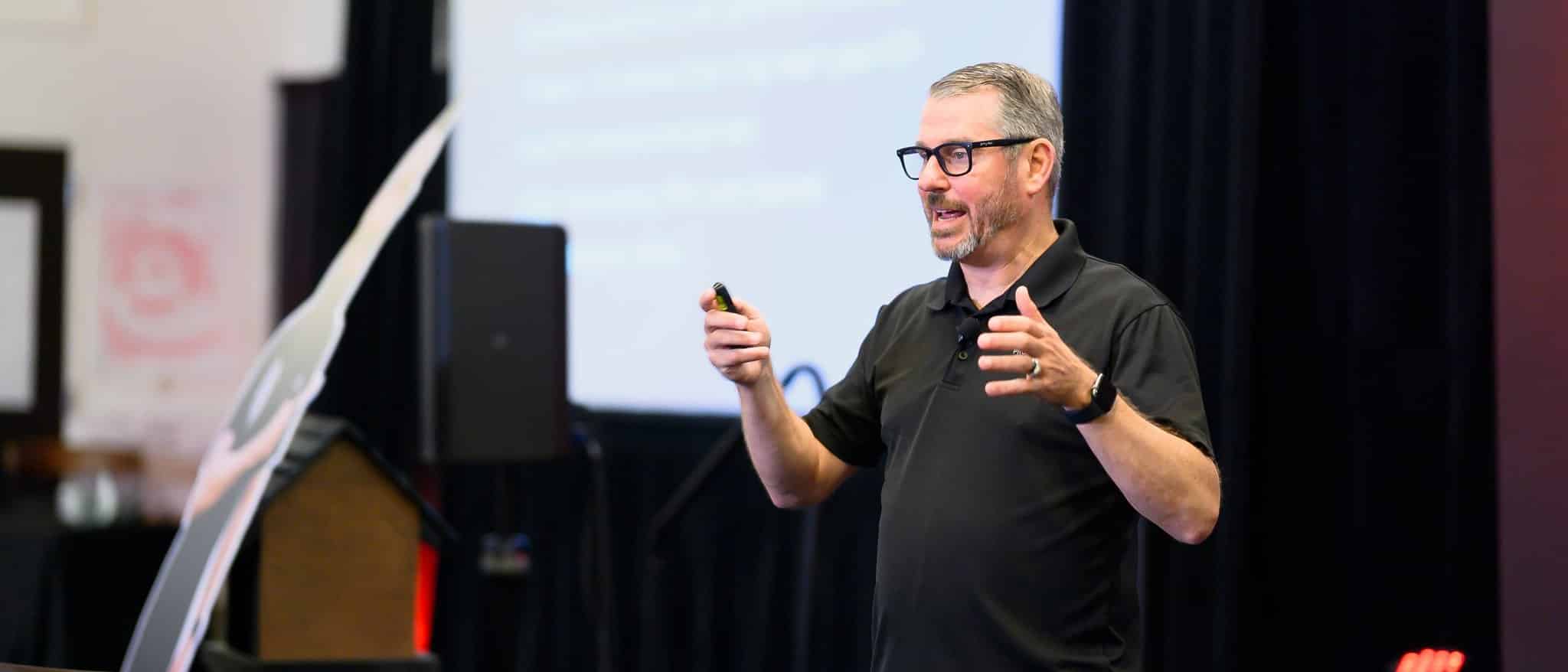
Keynote
Influence: The Intersection of Authenticity, Intention, and Trust. How to Get Things Done…even when you’re not in power.
Most of the people you need something from do not work for you. Clients, vendors, the other department, the board, the partner who owns half the decision. The org chart gives you no authority over any of them, and the title you do have buys less than you think. Influence is earned in the small moments, not claimed from a title. This keynote, delivered for EDPA, shows your room how that earning actually works: what makes an ask land, why trust gets built or spent in ordinary exchanges, and how to check your own intention before the conversation that matters.
What the room walks out with
I led five companies and I have advised more than a hundred B2B companies since. In every one of them, the people who got things done across the building were not the ones with the biggest title. They were the ones other people chose to say yes to. That is teachable. Your audience leaves with three things they can use the next morning.
- The three tests every ask passes or fails. Is it authentic, is the intention clear, and has the trust been earned? An ask that fails any one of the three gets a polite no, or worse, a yes that never turns into action. The room learns to run the test before they open their mouth.
- How trust is built in ordinary moments. Nobody earns trust in the big presentation. They earn it in the follow-up they said they would send, the bad news they delivered early, the credit they passed along. I show the room which small moments count and which ones quietly cost them.
- The intention check before a hard conversation. Most hard conversations go sideways because the person walked in wanting to be right instead of wanting a result. A short check, done honestly, changes what you say and how it lands.
The framework it teaches
Two frameworks carry the talk. Curiosity over Conviction is the posture: walk into the conversation asking before telling, because the person across the table already knows whether you came to listen. Positive Constructive Conflict is the method: how to disagree hard on the work without spending the trust you need for the next conversation. Both are written up on ProvenChaos so your people can go back to them after the room empties.
Formats
Keynote. Built for a main stage or a general session. It works as a conference opener, because it sets up every conversation that follows, and as a closer, because it sends people home with something to do.
Offsite opener. The first session of a leadership offsite, so the working sessions that follow are run by people who know how to move each other.
Virtual. When it has to be. Every version is calibrated to your room: tell me who is in the seats and who they need to influence, and I will build the talk around those conversations, not generic ones.
Who books this talk
- Association conferences. Members who run their own companies and still have to move clients, suppliers, and peers who owe them nothing. EDPA booked this talk.
- Cross-functional leadership rooms. Sales needs operations, operations needs finance, and nobody reports to anybody. This talk is about how work gets done across those lines.
- Agencies and event companies. Businesses where the whole job is getting a client, a venue, and a crew to say yes on a deadline, with no authority over any of them. I gave the 2024 version at Event Marketing Congress, and the full keynote is here.
Questions planners ask
Who is this talk for?
Anyone whose results depend on people they do not manage. That covers most leaders, most salespeople, and almost everyone in a client-service business. It lands hardest with rooms full of people who have real responsibility and not enough authority to match it. This is one of four talks; see everything I speak on.
Is it a soft-skills talk?
No. It is a results talk. Influence is how work gets done across layers of a company and across the table from a client. When people cannot move anyone they do not control, projects stall, deals slip, and the leader ends up doing it all personally. I ran five companies. I know what that costs. This talk is about getting the yes and getting the work done.
Can it open a leadership offsite?
Yes, and it is a good fit for that job. An offsite is two days of people needing things from each other. Opening with this talk gives the team a shared language for asking, disagreeing, and building trust before the hard sessions start.
How is it different from the accountability keynote?
Creating a Culture of Accountability is about the people who report to you: how to hold a standard without policing. This talk is about everyone else: the people you need a yes from and cannot direct. Many teams book both. Accountability handles the vertical; Influence handles the horizontal.
Check availability
Send the date, the room, and what you need the audience to walk out with. I answer every inquiry myself.