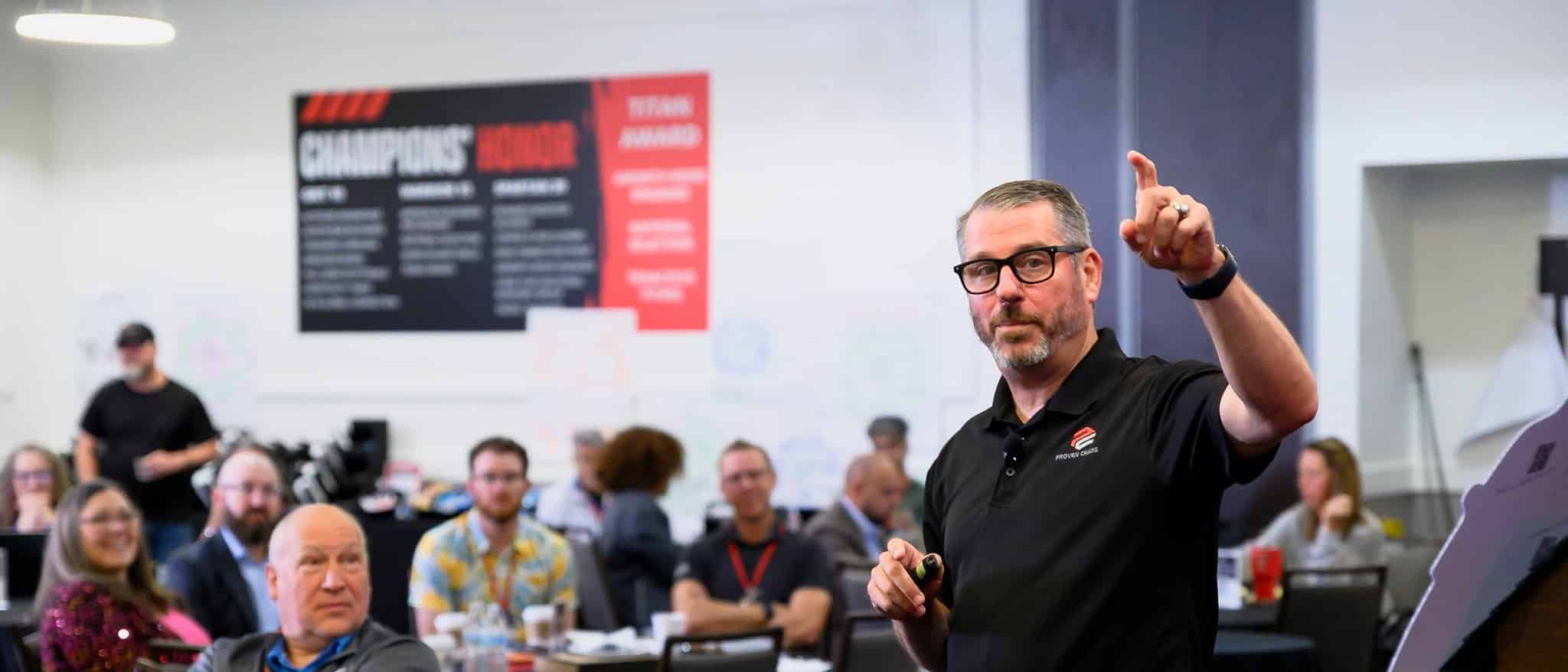
Keynote · Workshop
Creating a Culture of Accountability: the keynote on the line between accountability and policing.
Every leader in your room has someone who keeps missing. Most of them are handling it one of two ways: looking the other way, or hovering. Neither works, and both feel like accountability from the inside. This talk draws the line between holding people accountable and policing them, then gives your leaders the exact conversation to have Monday morning with the person who keeps missing. Built for leadership teams, founder groups, and sales kickoffs. Delivered at Equitable, among others. I led five companies with the payroll on my desk, and this is what I ran inside them.
What the room walks out with
- The difference between coaching and catching. Catching is waiting for the miss so you can point at it. Coaching is making the miss impossible to hide and then helping the person close it. Your leaders will know which one they have been doing.
- A scoreboard everyone can see. Accountability without a visible number is opinion. The room leaves with a way to put the score on the wall so nobody has to guess whether they are winning.
- The Monday conversation script. What to say, in what order, to the person who keeps missing. Not a pep talk and not a write-up. A conversation that ends with a commitment and a date.
The framework it teaches
The talk runs on two frameworks I have written up in full at ProvenChaos: Coaching vs. Catching, which is the lens, and the Accountability Framework, which is the system that makes the lens stick after I leave the stage. Read them before you book if you want to know what your people are going to be asked to do. Nothing in the talk is theory. It is what I ran inside the companies I led, and what I have watched work in the 100-plus B2B companies I have advised since.
Formats
Keynote. The full argument, the framework, and the Monday script. Best as the session the rest of your agenda builds on.
Half-day workshop. We work your team’s real misses, not a case study. People leave with their own conversations drafted and a scoreboard they built themselves.
Offsite opener. Sets the standard for how the rest of the offsite gets run. Commitments made after this session tend to get kept.
Virtual, when it must be. It works on a screen. It works better in a room. Tell me which one you have and I will build for it.
Who books this talk
- Owner and CEO conferences. Rooms full of people who are the last line of accountability in their own companies and have nobody holding them to it.
- Leadership offsites. Teams that have agreed on the plan three years running and still have the same people missing the same numbers.
- Sales organizations. Kickoffs and sales leadership meetings where the scoreboard already exists and the conversations still do not happen.
Questions planners ask
Is this talk about holding people accountable or about micromanaging?
Holding people accountable. Micromanaging is what leaders do when they do not have a system, so they substitute themselves for one. The talk shows the difference, names it plainly, and gives your leaders a way to hold the standard without standing over anyone. This is one of four talks; see everything I speak on.
Can it be run as a workshop with our actual team?
Yes, and that is the version I prefer. The half-day workshop uses your team’s real misses, your real numbers, and the real people involved. Nobody leaves with a binder. They leave with the conversation they are going to have and the date they are going to have it.
Does Jerry customize the talk to our company?
Every time. Before the event I want to know who is in the seats, what they are missing, and what you need them to do differently on Monday. The framework does not change. The examples, the language, and the pressure points do.
How far in advance should we book?
Tell me the date and I will tell you. I answer every inquiry myself.
Check availability
Send the date, the room, and what you need the audience to walk out with. I answer every inquiry myself.