You’re probably standing in the way of the work you want done, and nobody on your team is going to tell you. That’s the leadership gap: the distance between what a leader thinks the job is, which is doing, and what the job actually is, which is creating the conditions for other people to do.
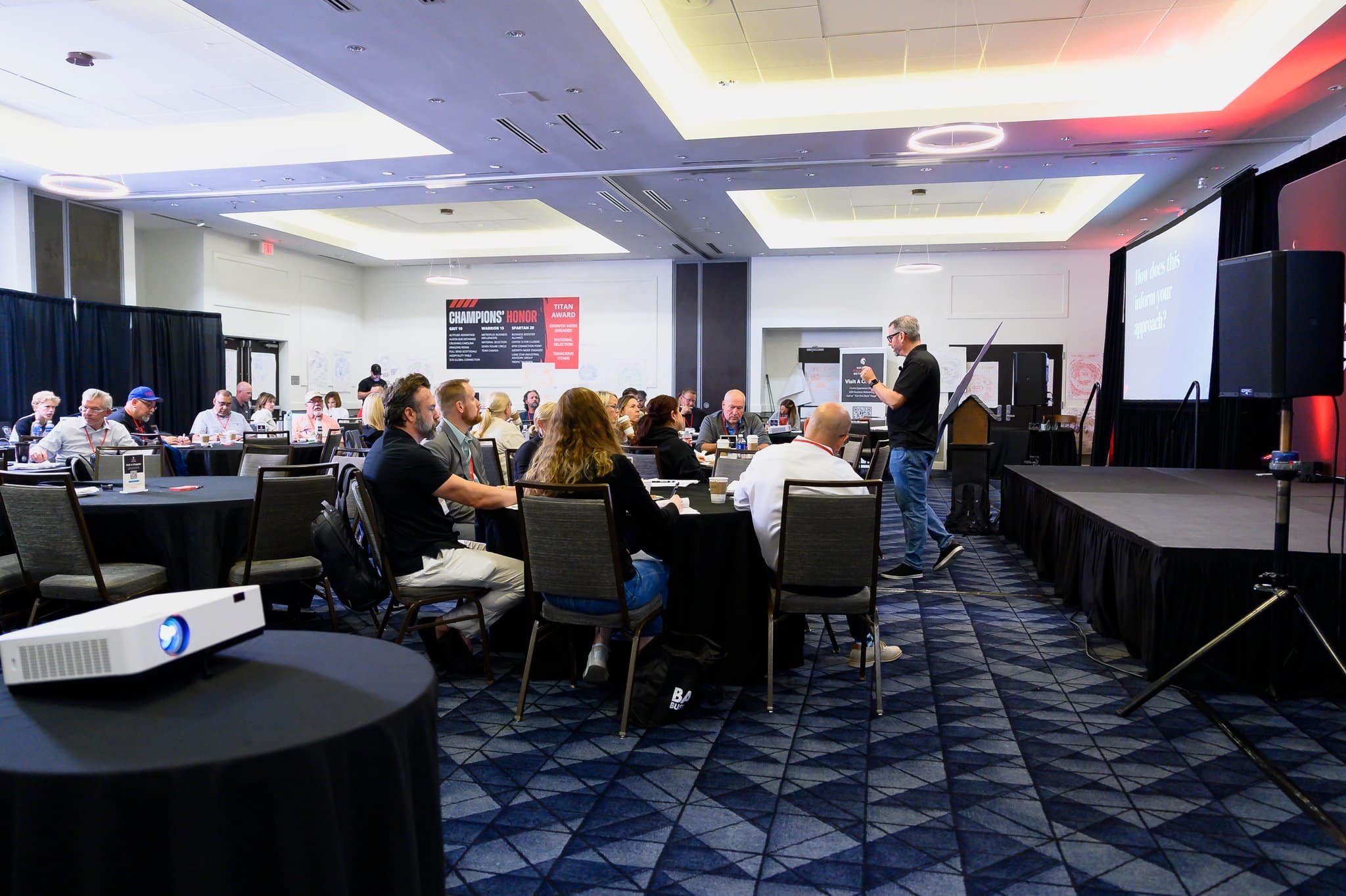
I gave this talk at AvKare in May 2025. I started with the part I got wrong, because I’d rather show you the gap than describe it.
Valentine’s Day, twenty-five years old
I was twenty-five and helping to lead a company that went from $5.9 million to $15 million in revenue in eighteen months. I had one strategy for that kind of growth: do all the doing. A hundred hours a week. Couch outside the office. Every decision came across my desk because I’d built it so that every decision had to.
On Valentine’s Day I ended up flat on a gurney with electrodes on my chest and a blood pressure reading of 195 over 96. My heart was fine. What I’d been asking of it wasn’t.
Looking back, I’d gotten two things wrong. I call the first one the high achiever’s trap. I thought the leader was the person who did the most. Reality: great leaders manage people, projects, and resources to create results. They don’t produce the results with their own hands. The second was power. I withheld information and decision-making authority, because handing it out felt like losing control. Reality: great leaders give power away, freely and on purpose. The hint I give every CEO who flinches at that line is that giving away power is how you get to do bigger, cooler stuff. You can’t take on the next thing while you’re still holding the last one.
Both mistakes came from the same wrong answer to one question: what is a leader for?
The job in one sentence
Leaders create a predictable environment for people to thrive. That’s the role. Everything else is technique.
Predictable means your people can see where the company is going, know what’s theirs to own, and trust that you’ll be the same person on Friday you were on Monday. In that environment people get agile, engaged, and autonomous, because they’re not spending half their energy guessing. Guessing is the most expensive thing in most companies, and it never shows up on a P&L.
What has to be true for the environment to be predictable? Five things. Clarity on where we’re going: a plan, and a plan that’s been communicated, which is not the same thing. Clarity on roles and responsibilities: an org chart and defined process, so two people aren’t both sure the same thing is theirs. Consistency of the leader. Trust, which you earn and can’t demand. And creativity, discipline, and focus aimed at throughput rather than activity, because a busy team and a productive team look identical from the doorway.
Here’s the test of whether it’s working, and it’s not a metric. It’s a question every employee in every company answers on the drive home, whether you ask it or not: did you have a good day? The goal of leadership is to make the honest answer yes, most days, for most people. Not because you’re nice. Because people who have good days do extraordinary work, and people who don’t, leave, either out the door or at their desk.
Leadership quicksand
When it goes wrong it goes wrong in a sequence I call leadership quicksand, and it starts with the plan nobody wrote down. I’ve written that one up separately.
The three hats
So how do you close the gap? I gave the room a way to think about the role. The three hats of leadership are the three jobs every leader holds at once: the leader as individual, the leader as technician, and the leader as strategist. Most leaders are wearing one of them well and assuming the other two take care of themselves.
The leader as individual is you, before anyone else walks in. Personal vision. Personal values. A personal board of directors, meaning the handful of people allowed to tell you the truth. A morning routine. Intentions. The goal here is to answer one question clearly: how will I show up for my people? I call the answer your operating system. It’s the set of decisions you make about how you’ll behave before the day gives you a reason to behave badly. Respond, don’t react. The consistency your people need starts with you being predictable to yourself.
The leader as technician is the craft. Accountability. Communication. Crucial conversations. Coaching. Negotiation. Running a meeting that’s worth the payroll sitting in it. And project management, which is the most underrated leadership skill there is, because a plan nobody can execute is a wish. The goal is a craftsman mentality: build the competencies until you have confident competence, because competence is where trust starts. There’s an old line for this: there’s nothing more frightful than ignorance in action. Enthusiasm without skill burns trust.
The leader as strategist is the hat most leaders admit they wear least. The goal is to chart a clear path into the future, which takes us right back to that predictable environment. My tool is the 90-day planning cycle. Ninety days is long enough to finish something real and short enough that nobody can hide. It creates velocity. You see the future, then you impose your will on it through planning, instead of letting the quarter happen to you.
What to do Monday
Pick the hat you’ve been neglecting. You already know which one. If it’s the individual, write down how you intend to show up this week and read it before you open email. If it’s the technician, pick the one competency your team would name if I asked them privately, and go get better at it. If it’s the strategist, put a 90-day plan on one page and say it out loud to the people who have to carry it.
Then ask someone on your team, with a straight face: did you have a good day? Listen to the whole answer. That’s the job.
I gave this as a talk to a leadership team. If your room needs it, start at Speaking.