The job in a crisis is not to survive it.
Most leaders plan for exactly that. Get to the other side. Hold the line. Keep the doors open until things settle. It’s a plan for coming out the other side smaller, tired, and a step behind the one competitor who didn’t wait.
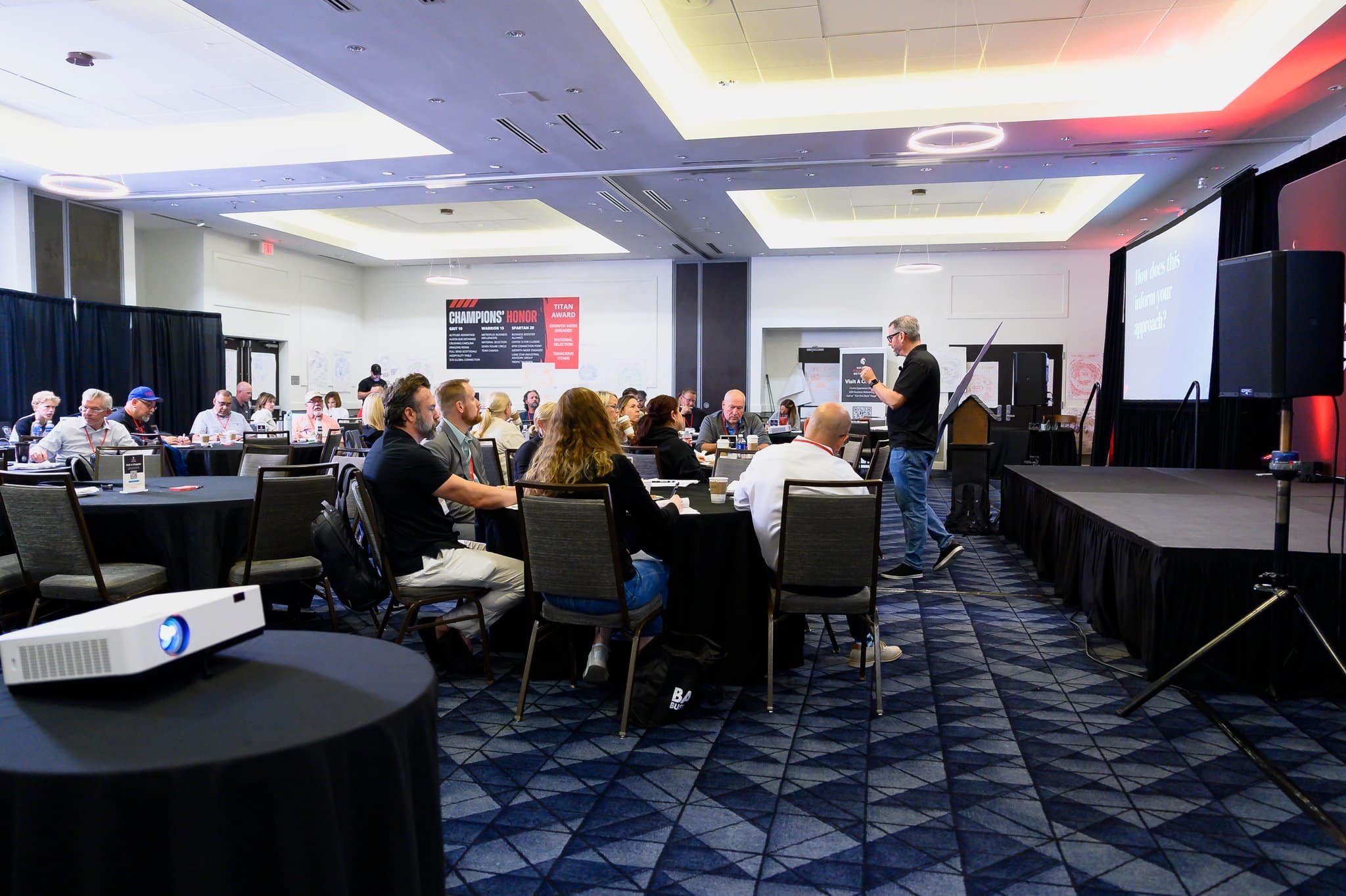
I gave this talk in person for Equitable in April 2020, a few weeks into COVID. Every slide about “working from home in the new economy” was describing a kitchen table. The moment has passed. The idea hasn’t, because the next crisis is already on the calendar. You just can’t read the date yet.
Two pictures
I opened with two pictures. The first was a man on a tightrope. The second was the eye of a storm.
Almost every CEO I’ve talked to recognizes at least one. The tightrope is the company that has no margin for a wrong step: one lost customer, one key hire walking, one bad month, and the whole thing wobbles. The eye of the storm is subtler and more dangerous. It’s the leader who lives inside the chaos so long that it starts to feel calm. Everything around you is spinning, and you’ve stopped noticing, because you’re in the middle of it and the middle is quiet. Right up until it isn’t.
Both feel like leadership. Neither is. They’re both forms of reacting, and a company that only reacts has handed its steering wheel to whatever happens next.
Survive, thrive, accelerate
So here’s the idea. Survive to Thrive to Accelerate is a three-stage sequence for leading through chaos: stabilize the business, run it with intention instead of reaction, then use the freeze everyone else is in as your opening to move.
The sequence matters more than the slogan, so let me take the stages one at a time.
Survive is the stage everybody’s already in, whether they chose it or not. The danger is staying there. Survival mode feels productive because every hour is full, but the hours are full of triage. The cash call, the customer who might leave, the supplier who might not ship. The goal of this stage is not to endure it. The goal is to get out of it on purpose, and that takes one decision: you stop treating the noise as the job. You cut the options down to the few that keep the company alive, you make those decisions fast, and you stop re-deciding them every morning.
Thrive is where the goal I put on the screen lives: create quiet stillness so you can operate your organization with intention, strength, and confidence. Stillness is not calm circumstances. You don’t get to order those. Stillness is a leader who has built enough structure that the daily chaos stops reaching the decisions. A rhythm of meetings that actually run. Numbers you trust. People who know what winning looks like this quarter without asking you. When that’s in place, you’re operating the company instead of the company operating you, and the storm can blow all it wants.
Accelerate is the stage almost nobody plans for, and it’s the reason I gave the talk. Chaos creates opportunity, and that’s a market fact, not a motivational poster. When conditions change fast, most companies freeze. Their leaders go into the eye of the storm and wait for the weather to clear. That freeze is the opening. Customers whose vendors went quiet are listening. Talent that was unreachable a year earlier is picking up the phone. Competitors who were going to out-spend you have stopped spending. The company that has done the first two stages is the only one in the room that can move, and for a short window, moving is almost unopposed.
What this looks like with the payroll on your desk
I’ve led five companies as the operator, with the payroll on my desk, and the pattern never changed. The growth that people remember, the construction company that went from $7 million to $30 million in three years, happened through uncertain market conditions, not easy ones.
That’s the part leaders miss about the third stage. Acceleration isn’t a bigger effort. It’s the same effort, pointed outward, by a company that isn’t spending its energy on internal panic. You can’t accelerate from the tightrope. You fall. You can’t accelerate from inside the storm. You don’t even know which direction is out. You accelerate from the company you built in the second stage.
The question for your Monday
Here’s how to use this now, in whatever chaos you’ve got: a down market, a lost contract, a new technology that scares your team, or a plain old bad quarter.
Ask yourself which stage you’re actually in, not the one you’d like to be in. If the honest answer is survive, then your only job this week is to make the few decisions that get you to stable, and to stop re-opening them. If you’re in thrive, ask where the noise still reaches your decisions and build the one piece of structure that stops it. And if you’re stable and still waiting for things to settle, you’re leaving the third stage on the table. Somebody in your market isn’t.
One more thing, because it’s the line I closed on and it’s truer in a crisis than at any other time. The work never ends. It never will. But it can be fun again, and the leaders who get the most out of chaos are the ones who decide early that they’re going to enjoy the ride rather than brace for it. Stillness first. Then intention. Then go.
Chaos creates opportunity. The only question is whose.
I gave this as a talk. If your room needs it, start at Speaking.