Most companies can’t tell you what good looks like.
They can tell you the revenue target. They can tell you the headcount plan and the date the new system goes live. Ask the people doing the work whether today was a good day, though, and you get a shrug. Nobody told them. Nobody decided.
Knowing what good looks like means every person in the company can say, for today, what they were trying to do, by when, and whether they got there.
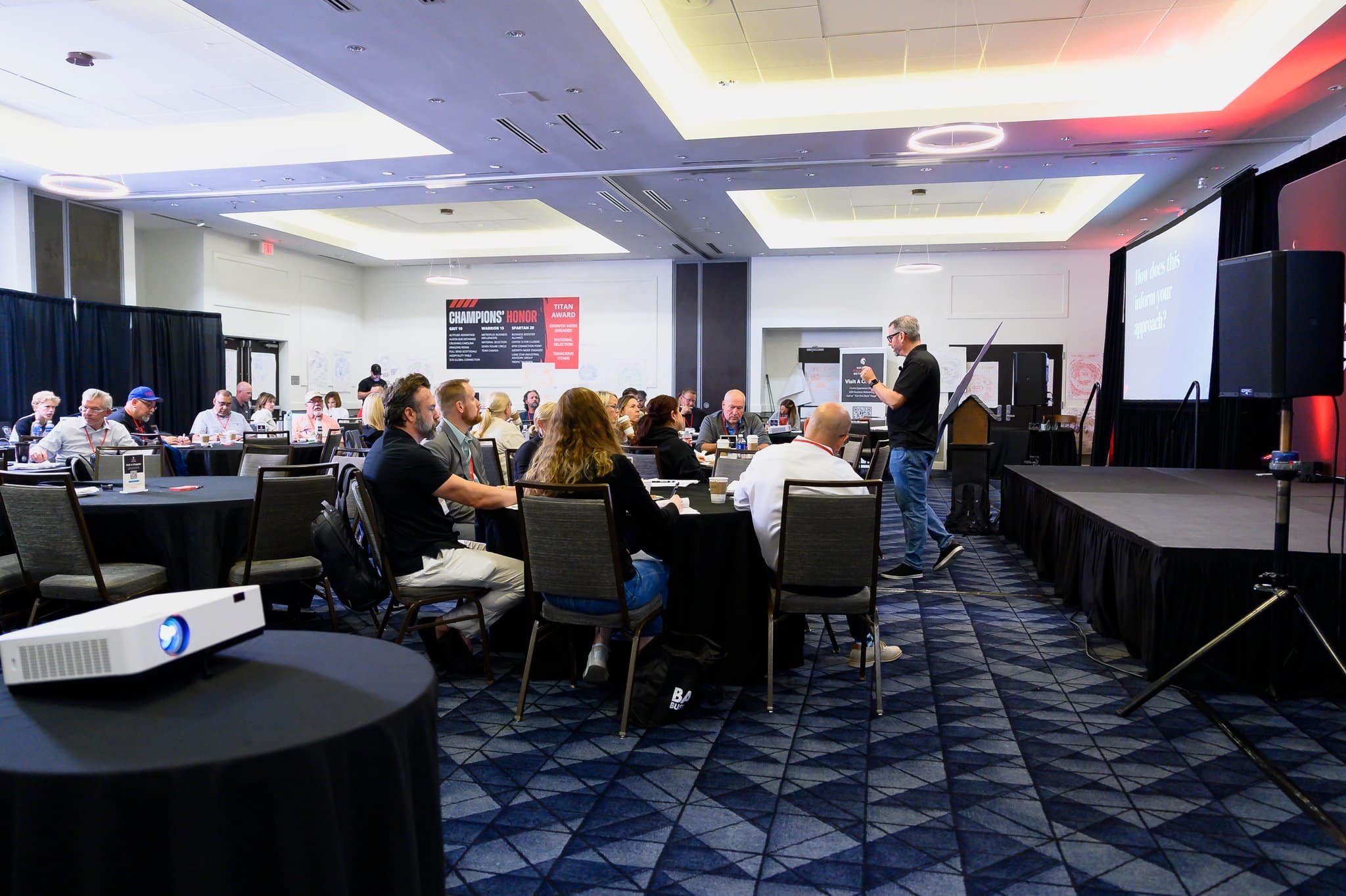
I put that to the leadership team at AvKare, and I opened with a number I’d worked out for their room: 180 people.
405,000
Take those 180 people. Give them 45-hour weeks, 50 weeks a year. That’s 405,000 hours of human life handed over in twelve months.
I let that sit on the screen for a while, because leaders don’t think about their company that way. They think in payroll and output. But 405,000 hours is a different kind of number. It’s the part of 180 lives that happens at work, and every one of those hours gets spent whether anyone planned it or not. Somebody is going to decide what those hours feel like. The only question is whether it’s you or nobody.
Your number is different. Run it anyway. Headcount, times hours, times weeks. It’s bigger than you think, and it lands harder when it’s yours.
The good-day test
Here’s my personal goal, and I’ve carried it through every company I’ve led and the 100-plus I’ve advised since. When every person in the company gets asked, “Did you have a good day?”, they can answer confidently.
That’s the good-day test. It’s simple: a company knows what good looks like when any person in it can tell you, without hesitation, whether today was one.
Not happy. Not easy. Confident. A tough day with a hard problem solved can be a very good day. A quiet day where nothing moved and nobody could say why is a bad one, even if everybody went home on time. Mood has nothing to do with it. It’s about whether the person knew what they were trying to do, knew by when, and knew at the end of the day whether they got there.
Most people fail the test, and it’s almost never their fault. They fail it because good was never defined for them. Their leaders know the annual target and assume it trickles down into a Tuesday. It doesn’t. The gap between “hit the number” and “what should I do before lunch” is where 405,000 hours go to drift. If you’ve ever wondered why good people on your team can’t tell if they’re doing a good job, this is the reason, and I’ve written about it as the invisible scoreboard.
Planning, the honest version
That’s why I define planning the way I do. Planning is living in the future, then imposing your will to make it true.
I know how that sounds. It’s supposed to. Most planning is the opposite: a spreadsheet that describes what you’d like to happen, handed to people who weren’t in the room, with no force behind it. That’s a wish with a budget.
Real planning has two halves. First you go live in the future. Not the fantasy version, the specific one. A year from now, what is true that isn’t true today? Who’s doing what differently? What does a good day look like for the person on the floor, the person on the phones, the person running the Monday meeting? If you can’t describe their good day, you haven’t planned. You’ve forecast.
Then comes the half that separates operators from dreamers. You come back to today and you impose your will. You make the future true by deciding, out loud and in public, what good looks like, and then refusing to let anything smaller stand in for it. That part is uncomfortable, because imposing your will on the future means saying no to a lot of perfectly reasonable things that aren’t it.
Find the kink in the hose
So what do you point all that will at? Meaningful problems.
Every company has a hose with a kink in it. Water’s going in at full pressure and a trickle is coming out the other end, and everyone’s arguing about the nozzle. You don’t need more pressure. You need to find the kink. One constraint, usually unglamorous, usually in a handoff nobody owns, is holding back everything downstream of it.
The instinct in a leadership room is to solve the problem that’s loudest, or the one that’s easiest, or the one that belongs to whoever isn’t in the meeting. Resist all three. Before you take action, ask one question first: is this problem worth solving? Not every problem is. Some are annoying and cheap. Some are expensive and irrelevant. The kink is the one where fixing it changes what comes out the end of the hose, and if you can’t explain that in a sentence, you haven’t found it yet.
Four questions before you move
Once you’ve picked the problem, I give leaders four questions. Answer them in writing, in order, before anyone lifts a finger.
What specifically is the problem I’m trying to solve? Specifically is the word doing the work. “Sales are soft” is a feeling. “Our close rate on inbound leads over $50,000 has dropped from 30 percent to 18 percent since March” is a problem.
What do I expect to happen, and by when? This is where good gets defined. If you can’t name the result and the date, you can’t tell anyone whether today was a good day toward it. You’re back to the shrug.
What are my alternatives? There are always at least three, and the first one you thought of is rarely the best. Forcing yourself to write down the others is the cheapest insurance in business.
What must be true for this to become a reality? This one catches the wishful thinking. If the answer is “the two people who can’t stand each other start collaborating” or “the customer changes how they buy,” you’ve found your real problem, and it’s not the one you wrote in question one.
Four questions. Maybe thirty minutes with a whiteboard. I’ve watched them save leadership teams months of motion that would have felt like progress and wasn’t.
Where do we go from here?
That’s the question I’ll leave you with. What moves a company is a leadership team that can look at its 405,000 hours and say, plainly, what a good one looks like.
Go live in the future. Come back and impose your will. Find the kink. Ask the four questions. Then make sure that when anyone in your company gets asked whether they had a good day, they don’t have to think about it.
I gave this to a leadership team. If your room needs it, start at Speaking.