Who likes being micromanaged? Nobody. Who likes to micromanage? Also nobody. And yet every leadership team I meet has both, running at the same time, in the same building. Smart people, working hard, wondering why the results don’t match the effort.
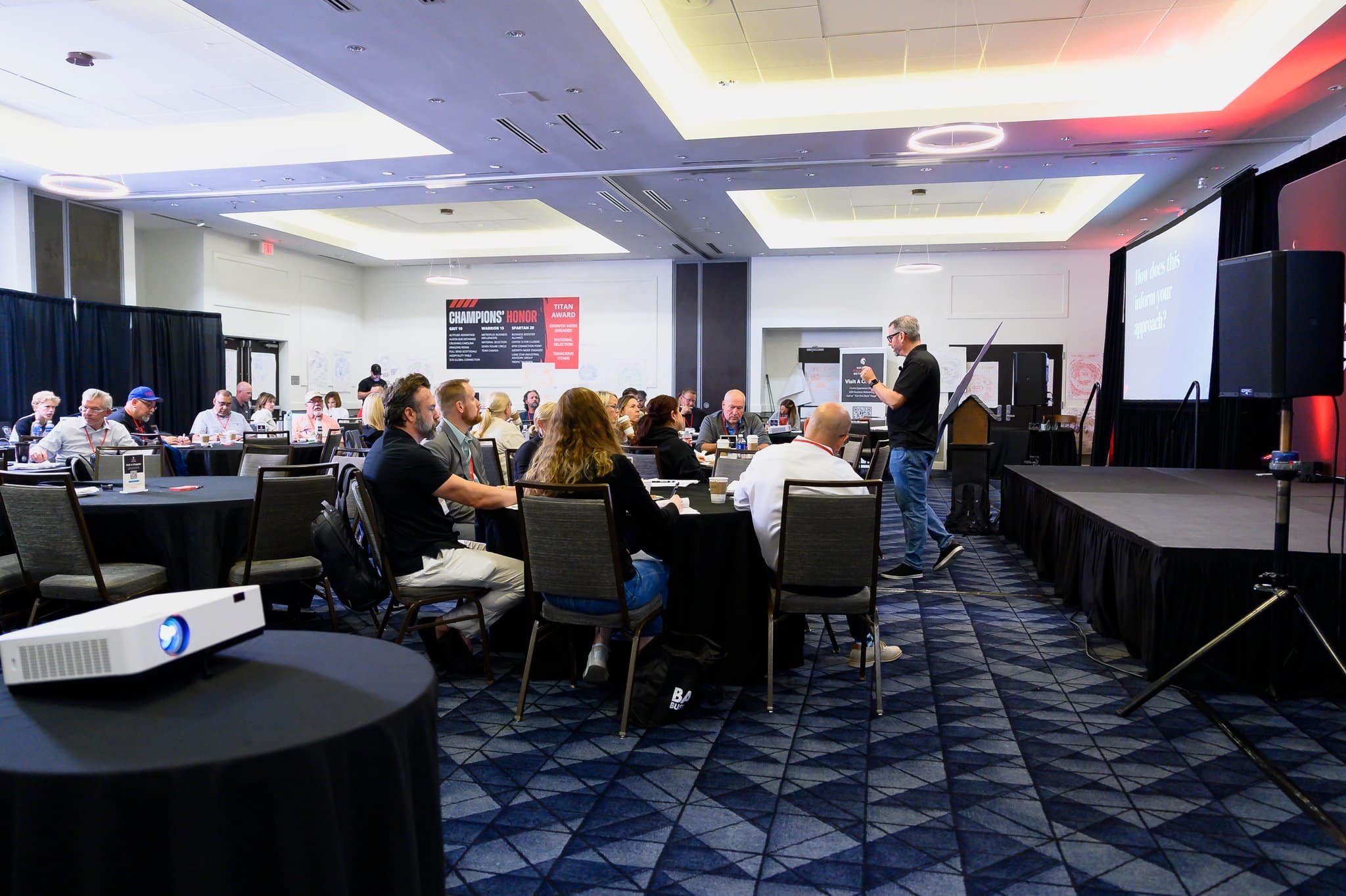
I opened with those two questions when I gave this talk at AvKare in February 2026, and they work in every room, because every room has the same problem. Nobody can explain why execution happens when it happens, and why it doesn’t when it doesn’t. So leaders default to the only lever they can see: push harder.
“The expectation is execution”
For a long time, I ran companies on one standard. The expectation is execution. I said it out loud and I meant it. It’s still a good standard. I’d still put it on the wall.
But here’s what it took me too long to learn. A standard isn’t a system. When execution slipped, my fix was the one every leader reaches for: “We have to level up.” “Step it up.” “You have to do better.” Those are behavior speeches. They work for about a week, because they change what people do without changing how people think. Then the old pattern comes back, and now the leader is inserting himself into everything “just to be safe,” which is the polite name for micromanaging.
Once I stopped treating execution as a personal virtue and started treating it as the output of a system, I could finally see where to put my hands.
What the Execution System is
The Execution System says execution is not a personal trait. It is what happens when trust, accountability, and an ownership mindset intersect, and it fails wherever one of the three is missing.
Trust creates the environment. Accountability creates the structure. Ownership creates the behavior. Stack all three and the work gets done without anyone yelling. Pull any one out and you get the symptoms you already know: slow decisions, late surprises, quiet misses, a leader who has become the bottleneck.
Let me take them in order, because the order matters.
Trust: the environment
When trust is present, decisions get made without fear, problems surface early, and autonomy gets earned instead of requested. It stands on four pillars, competence, consistency, integrity, and compassion, and I’ve written the full treatment in The Cross the Street Test.
The part leaders miss is this. Most trust breakdowns aren’t malicious. They’re usually not even personal. They come from unclear outcomes and invisible work, which means the system was set up wrong, not the person. Before you decide someone isn’t trustworthy, ask whether they ever knew exactly what a win looked like.
And trust, once it’s cracked, isn’t restored by intent. It’s restored by ownership. The reset conversation is three sentences and they all hurt a little: “I missed the mark.” “That’s on me.” “I need your help.” Vulnerability creates the connection. Ownership restores the credibility. I asked the room to write down a time trust was broken, name which pillar fractured, and then go fix it. That’s the assignment here too.
Accountability: the structure
Ask ten people what accountability means and you’ll get ten answers, most of them about blame. Here’s the definition I use: accountability is the shared commitment to own positive outcomes and deliver results without excuses.
But without clarity there can be no accountability. You’ve walked out of a meeting with your boss with no earthly idea what you were supposed to do or why it mattered. So have your people, after meetings with you. Accountability has four requirements. Specificity: what problem exactly are we solving, and what’s the expected outcome? Time: day, time, time zone. Ownership: one owner, always. Shared understanding: do we agree on what “done” means?
The tool I gave the room for this is 10/80/10. The first 10 percent of any piece of work is clarity: desired outcome, pathways, constraints, and the consequences we’ve agreed to accept. The middle 80 percent is ownership: do the work, make the decisions, solve the problems, no passengers. The last 10 percent is the finish: polish, standards, production-ready. The diagnostic is built into the tool. If leaders are fixing basics in the final 10 percent, clarity failed in the first 10.
With clarity in place, the person who accepts accountability makes three commitments. Execute as expected. Ask for more time, in advance. Ask for more resources, in advance. Delivery and communication rest on that person. No mother hens.
Ownership: the behavior
This is the inflection point, and it’s a mental shift, not a process change. Responsibility completes the task. Accountability owns the outcome. You weren’t hired to complete tasks. You were hired to solve problems.
Watch what happens to a team’s language when that shift lands. A reporting team with a responsibility mindset says, “We produce accurate reports on time.” The same team with an ownership mindset says, “We produce insights that give the company an unfair advantage and increase sales.” Same people, same tools. Once they understand the outcome their work exists to produce, their ability to contribute changes entirely.
I learned the difference on a soccer field, from a teammate named Brian Cummings. Brian was a bit player. On a hot September day we ran out of water, and everyone else stood on the sidelines watching. Brian hopped the fence with a water bucket, ran a mile uphill to the school, found a way to get it filled, and carried it back on his shoulder. Nobody assigned him that. Water wasn’t his job, and he wasn’t the star. He saw what the team needed and owned it, and the lesson has stayed with me through every company since: there’s always a way to contribute. That’s the ownership mindset in one bucket.
So the challenge for every person in the room, and for you: in your role, are you being responsible, or are you being accountable?
Where the leader actually fits
If your people lack context, decisions slow, escalations climb, and autonomy collapses. You become the bottleneck, and you did it to yourself. Context is one leg of what I call the Capacity Triangle, with skillset and mindset, and it’s the leg leaders forget they own.
The leader’s role in the Execution System is narrow and non-negotiable: leaders create a predictable environment for people to thrive, one where they can make agile, autonomous, engaged decisions. Executors own the decisions inside their role, raise flags early, and deliver outcomes. Leaders supply context, communication, thought partnership, and that predictable environment. The company supplies radical transparency, clear outcomes, the systems, and the resources. When something breaks, you can point at which layer failed, instead of pointing at a person.
That was the goal of the talk: a shared language, and an end to heroic leadership. Win more often and everyone gets paid in money, autonomy, and fun.
So find the place the issue is showing up. Name the specific problem. Ask which of the three is missing: trust, accountability, or ownership. Then fix that, instead of asking everyone to try harder.
The expectation is still execution. Now you know what produces it.
I gave this as a talk. If your room needs it, start at Speaking.