Nobody on your team is trying to make a dumb decision.
I know that’s not how it feels at 4:45 on a Friday when a smart person you hired, trained, and pay well has just done something that makes no sense. But I’ve run five companies and advised more than a hundred, and I’ve never once met the employee who woke up and decided to get it wrong. Dumb decisions aren’t about IQ. They’re about context, clarity, and the conditions we create as leaders.
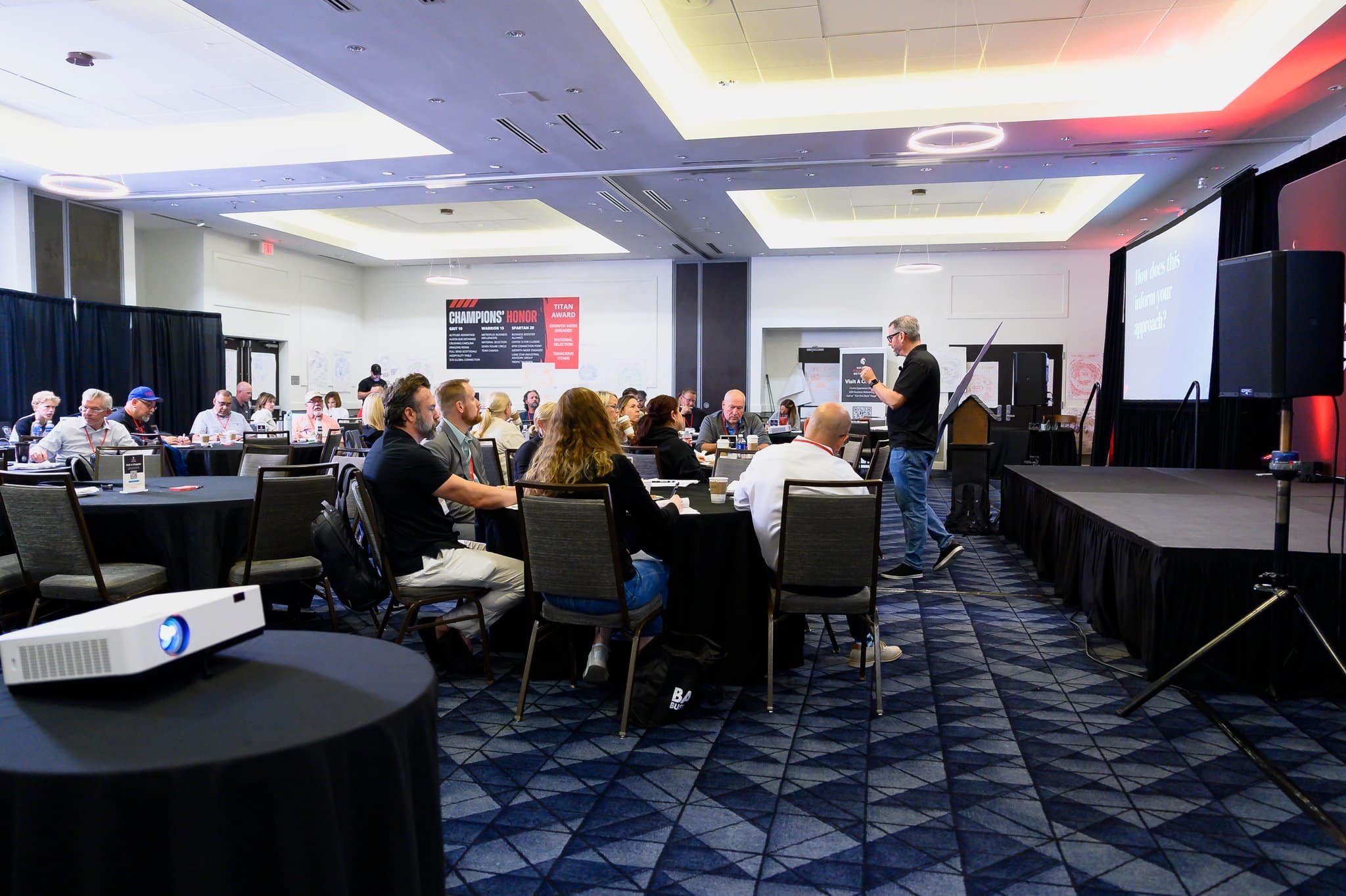
I gave this talk at RockBox, and I opened with a confession.
I ran a construction business once
We took it from $7 million to $30 million in three years. Inc. 5000 twice. A Best Places to Work award. The fastest-growing company in Jacksonville. From the outside it looked like a machine.
From the inside, for a long stretch, it looked like me getting my teeth bashed in. At NFFS it looked like crews in the field making calls that cost real money. Managers freezing on decisions I’d have made in thirty seconds. Two people arguing about whose job something was while it sat undone. And every time, my first reaction was the same one you’d have: what were they thinking?
The honest answer, which took me longer than I’d like to admit, was that they were thinking exactly what I’d given them to think with. Which wasn’t much. I had the whole picture in my head. They had the slice I’d remembered to hand them. Awareness precedes action, and I was asking for action from people I’d kept in the dark.
The clarity gap
Here’s the idea I’d want you to take home if you only take one. The clarity gap is the gap in context and talent between what a leader holds in their head and what their people actually have, and everything you hate about running a company lives inside it.
Wasted effort, decision paralysis, blame shifting, random outcomes: all of it is what people do when the rules are unclear. Not because they’re weak. Because stress doesn’t make good decisions, and nothing is more stressful than being judged on a game whose rules you were never taught.
That’s why people resent their jobs and love their sports. In sports everyone can see the field, the clock, the score, and the rules. Nobody argues on Sunday about what a first down is. At work, most people can’t tell you how they’d know if they were winning this quarter. Then we wonder why they play it safe.
Two lines follow from this, and I’d put them both on the wall.
Without clarity, there can be no accountability. You can’t hold someone to a standard they can’t see. You can only surprise them with it.
The genesis of all conflict is a disjoint in expectations. Almost every fight I’ve mediated on a leadership team, when you strip out the personalities, was two decent people holding two different pictures of the same deliverable. Nobody drew the picture, so everyone drew their own.
Is it them, or is it me?
When someone underperforms, most leaders jump to one of two explanations: skill or attitude. Either they can’t, or they won’t. I carry a third one, and it’s the one I check first now: do they know?
I diagnose it with the Capacity Triangle: skillset, mindset, context. Skills are tools, learned through repetition. Mindset is the engine, the grit to show up and push through. Context is the clarity about where, when, and how to apply both. Two of those three are on the employee. The third is on me, and the third is the one I was worst at supplying.
Then I ask the harder question, the one I built the 5 Ts of Execution to force: when something doesn’t get done, which side of the coin is it on? The employee brings talent and tenacity. The leader owes tools, time, and training. Before you fire the person, check whether you paid your three. In my experience, most “performance problems” are a leader who is short on one of them and hasn’t noticed.
That reframe stings. It’s supposed to.
Take what’s invisible and make it visible
So how do you close the gap? Not with more hours. Systems and processes are great, but life is nuanced, and you can’t be in every room to think for people. What you can do is hand them the way you think.
Mental models teach the why behind decisions. They’re the lenses your team uses to read a problem and weigh a tradeoff. Frameworks teach the how. They turn thinking into a repeatable action: a decision process, a meeting format, a hiring sequence. Together they’re an operating system, and an operating system is the only thing that’s repeatable, scalable, and predictable at the same time.
One decision mental model I teach is to decide fast and iterate rather than wait to be sure, because not deciding is a decision too, and it’s the one where you learn nothing. The framework that goes with it is six questions anyone could run without me in the room: Is one option clearly better long term? Clearly better short term? Can we reverse it? Is it truly important? Would more time or information produce a better answer? Is that information worth the cost of getting it? Hand a good person that list and they’ll make the same call you’d have made, more often than not, while you’re somewhere else.
Start at the top. Vision, values, and company objectives are the north star frameworks; every model below them has to trace back to one of those three. Then build down into the places decisions actually get made: hiring, compensation, meetings, execution, how you handle a bad month. Write it down. Say it out loud. Repeat it until you’re bored. The point where you’re sick of saying it is about the point where it starts to land.
The job
Here’s the job description I’d hand any leader, at a gym or a software company or a construction yard: create a predictable environment for our people to make engaged, agile, autonomous decisions.
Predictable doesn’t mean rigid. It means nobody has to guess. They know how we decide, how we hire, what a win looks like, and what happens when something slips. Inside that environment, smart people make smart decisions without you. Outside it, the same people make dumb ones, and the dumbest decision in the building was yours: assuming they knew.
Your job is to close the clarity gap, the gap in context and talent. In that gap is where stress lives, conflict lives, turnover lives. Close it, and that’s where winning, trust, and growth live.
I gave this as a talk to a leadership team. If your room needs it, start at Speaking.